
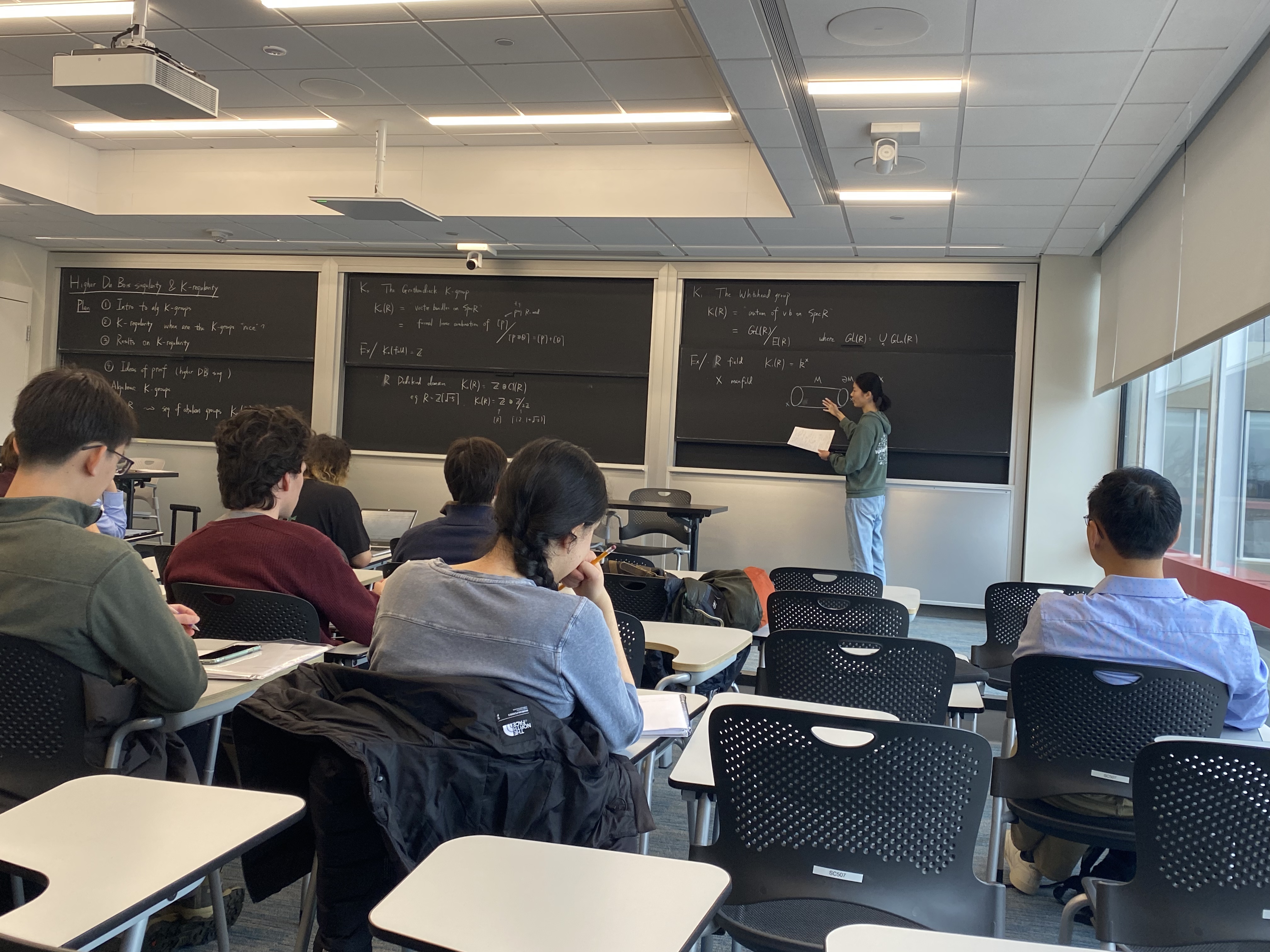
One idea from today’s seminar stayed with me: mathematicians often study objects not by their surface properties but by identifying invariants that remain stable under transformation.
In algebraic K-theory, structural properties persist even when objects change form. The same concept appears in human development.
Students’ surface metrics — grades, competitions, and test scores — fluctuate dramatically over time. But deeper cognitive traits such as curiosity, abstraction tolerance, and intellectual independence often remain stable.
For long-term human capital development, identifying and cultivating these structural traits may matter far more than optimizing short-term metrics.
CHG Principle
Structural Traits Outlast Surface Metrics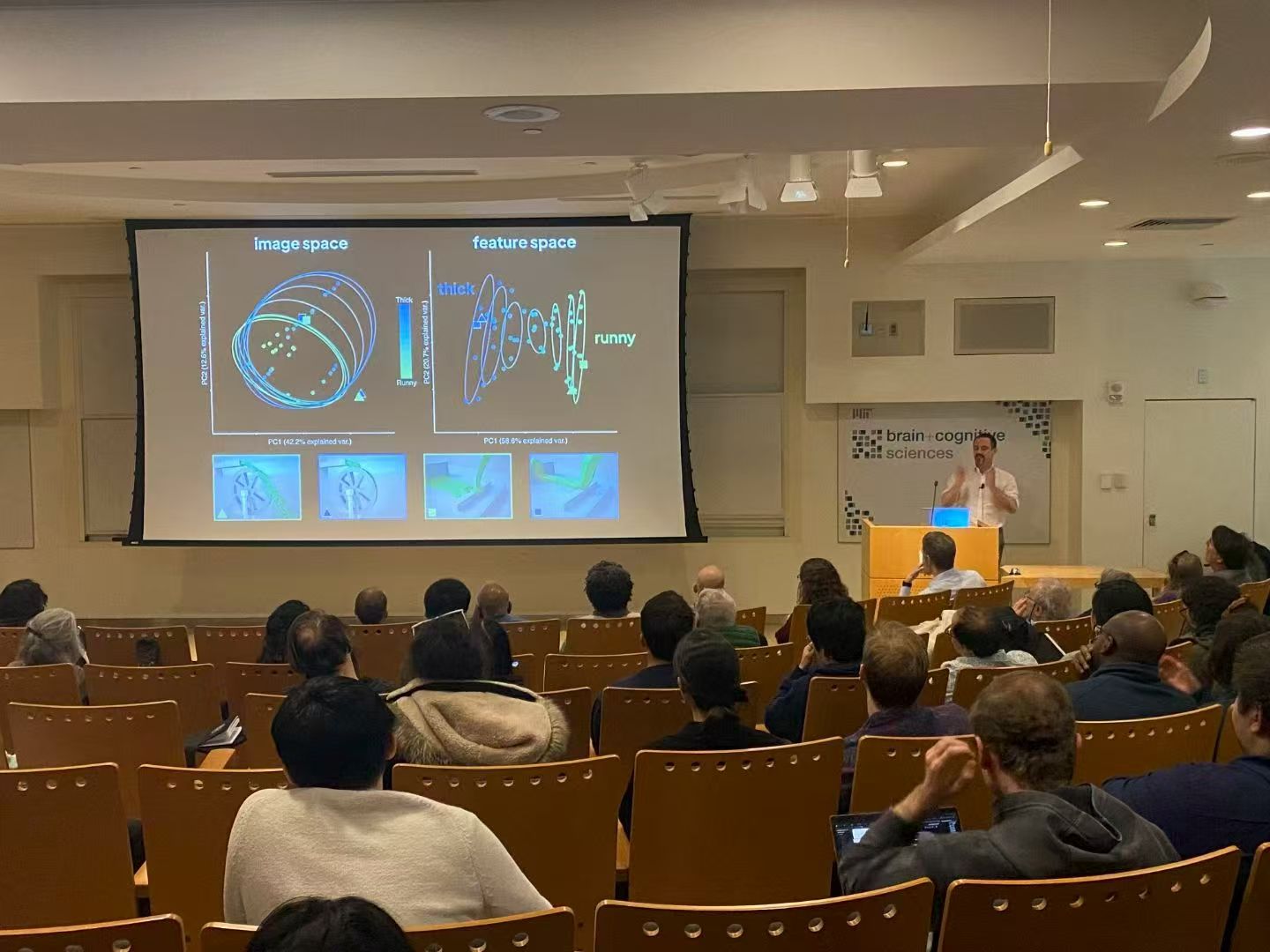
One idea that stayed with CHG: the brain performs two complementary types of inference — perceptual inference, which estimates the immediate environment, and ontological inference, which determines which latent variables are worth tracking.
At CHG, we have observed that academic challenges rarely stem from effort. More often, students misidentify structure, optimizing surface features rather than underlying constraints. Common patterns include:
- Focusing on procedure instead of understanding deep structure
- Narrowing attention too early or exploring without convergence
- Confusing superficial indicators for meaningful signals
Before the talk, a question was posed to Professor Fleming regarding implications for structured learning environments. His insight: many children develop powerful self-supervised perceptual skills in unstructured settings before formal schooling.
CHG interprets this as a cue for scaffolded learning:
- Exploratory phases: encourage detection of multiple latent variables to expand cognitive capacity
- Structured phases: guide attention toward task-relevant structures to optimize efficiency and reduce transfer loss
The ideal outcome, aligned with natural brain mechanisms, is self-supervising learners who can detect, prioritize, and act upon meaningful structures independently.
CHG Principle — Structure-First Learning
Elite learners excel by accurately perceiving underlying structure. Learning environments should expand exploration of latent variables early, then narrow focus on task-relevant structures, cultivating students who become self-supervising, structure-aware learners.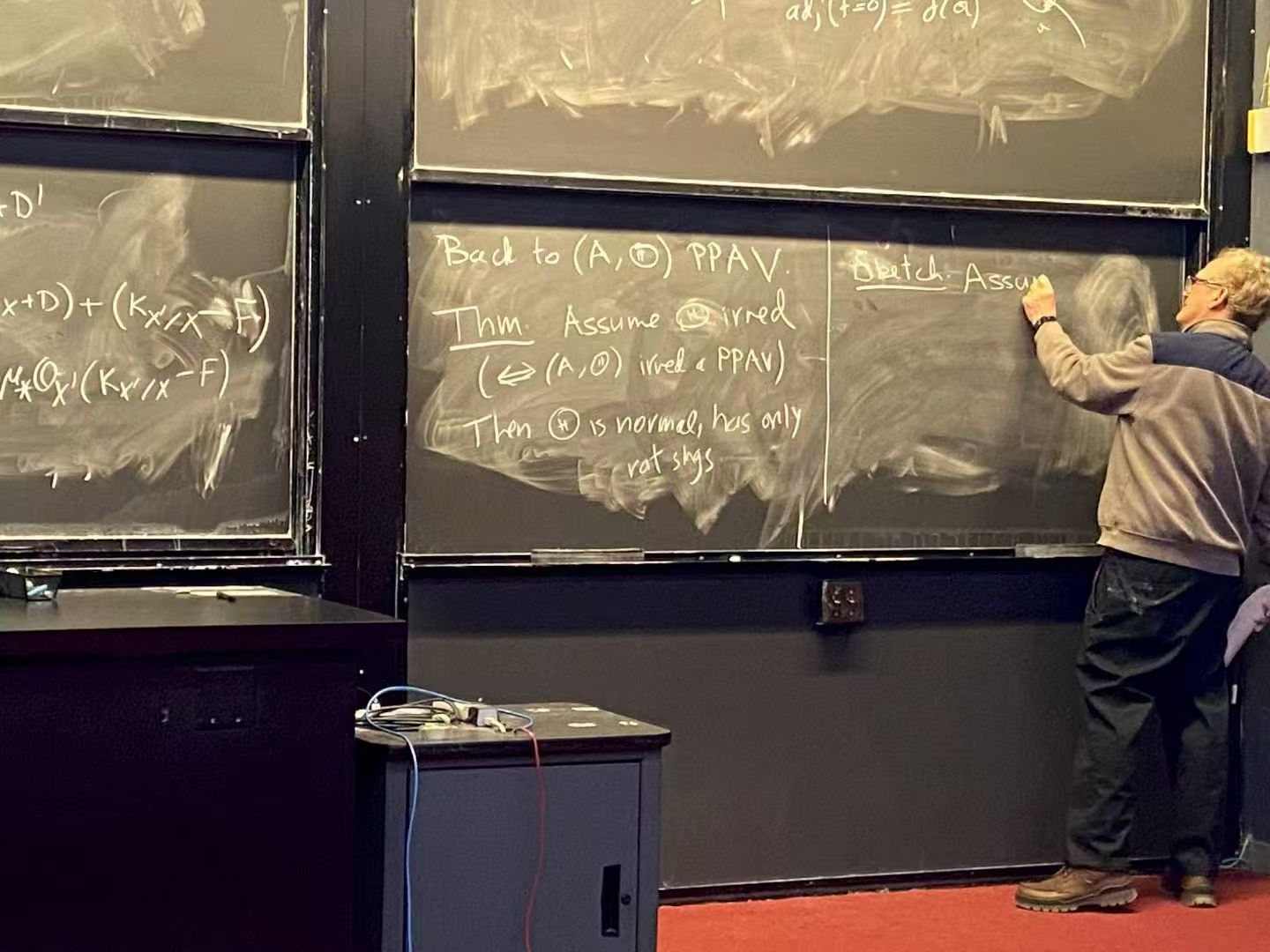
Today I attended the MIT–Harvard Algebra–Geometry seminar with my two children. The lecture focused on multiplier ideals and vanishing theorems — topics from advanced algebraic geometry.
My kids are in second grade. They copied what they could from the blackboard, then quietly filled their notebooks with their own drawings and symbols.
After the talk, they asked Professor Rob Lazarsfeld a simple question: how can we become mathematicians like you? What should we do now?
He smiled and offered a straightforward answer: practice mathematics every day.
As a parent, I shared something I have been observing. My children’s calculation skills are improving rapidly, but like many young students, their reasoning in word problems develops more slowly.
To address this, I designed a step-by-step problem-solving map for them: slow down the thinking process, organize the information, rewrite the question in their own words, and sequence the reasoning before computing.
Professor Lazarsfeld reviewed the approach and said it made sense. He also encouraged children to write their full reasoning process in a math journal.
That comment stayed with me. Learning at the highest level and then translating it into tools accessible to young minds is a meaningful intellectual exercise.
CHG Principle
Mathematical thinking develops through disciplined reasoning — calculation should follow structured thought, not replace it.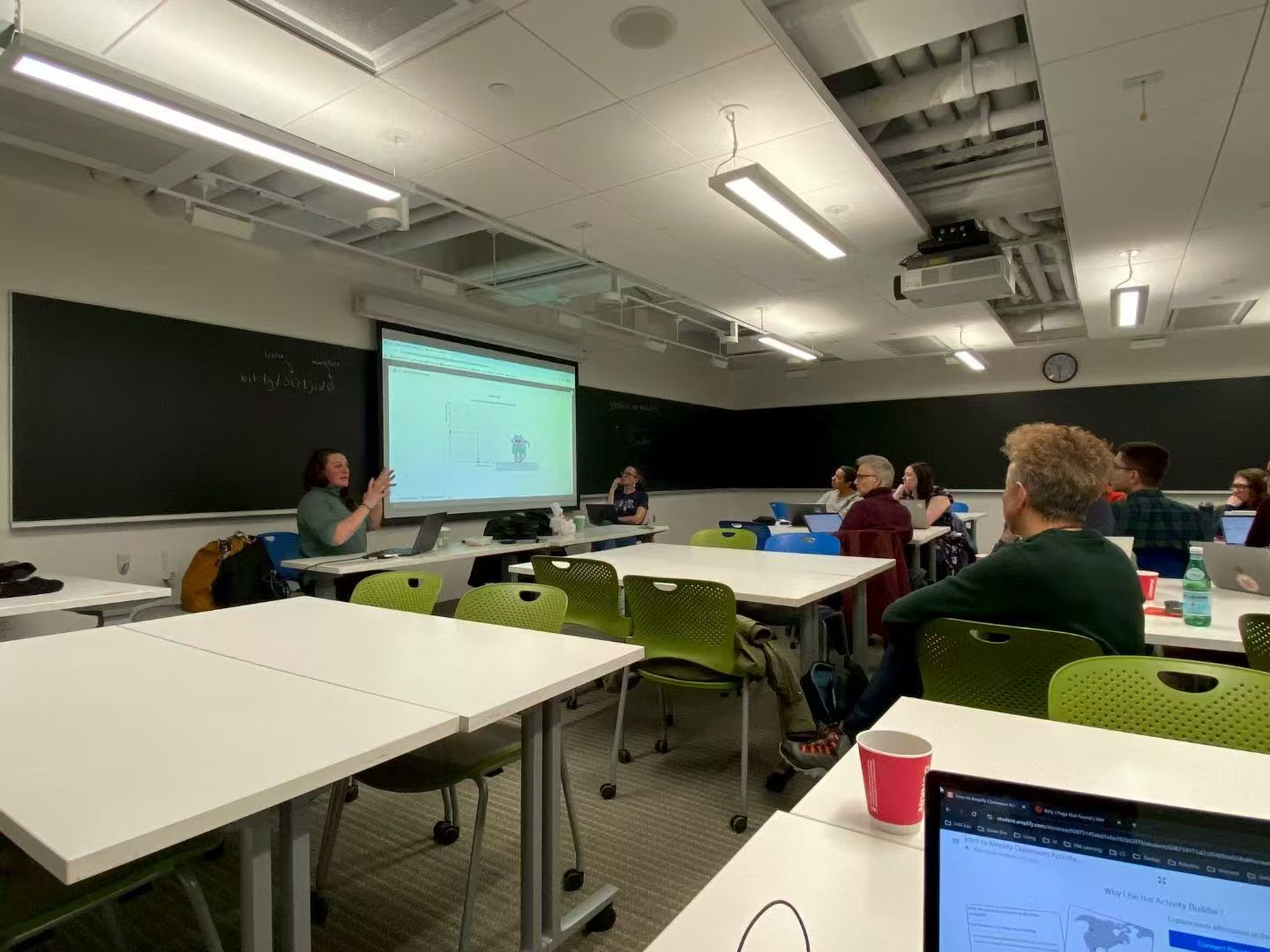
One theme from today’s mathematics design workshop stood out clearly: elite learning outcomes rarely come from adding more content. They emerge from stronger instructional design.
Effective mathematics learning environments balance two drivers: rigorous content and the student’s real learning experience. When these align, well-sequenced activities can reduce cognitive friction, increase engagement, and accelerate true mastery — especially when students receive immediate interpretive feedback.
The workshop also reinforced a pattern frequently observed in high-achievement environments: student confidence often outpaces student mastery.
Closing that gap requires measurement systems grounded in psychometrics rather than self-reported understanding. Structured feedback loops allow educators to identify real learning progress and guide students toward deeper competence.
These design principles closely align with the system-level approach CHG applies when building personalized education execution systems for ambitious students and families.