Observations from academic seminars and research communities related to learning, mathematics, cognition, and long-term human capital development.

1. The central problem: robots need enormous amounts of data
Prof. Bobu began with a fundamental challenge in robot learning: real-world human data are limited, messy, and imperfect, yet robots are expected to operate in highly variable environments such as homes, offices, and streets.
Current data-driven approaches can require surprisingly large amounts of demonstrations. One example discussed in the workshop required approximately 300 demonstrations, or about three hours of observation, for a relatively simple task. Even after substantial training, performance can deteriorate when the robot encounters situations that differ only slightly from its training environment.
This creates a fundamental scalability problem: if every new object, position, environment, or variation requires another human demonstration, robots cannot realistically become broadly capable simply by accumulating more demonstrations.
2. The real bottleneck is not only data quantity — it is data efficiency
A particularly important point was that existing approaches can “burn” precious human data by requiring demonstrations for many different variations of essentially the same underlying task.
Humans, by contrast, are capable of generalizing from relatively few examples. We do not need to see every possible mug shape before understanding the concept of “mug,” nor do we need demonstrations for every possible position of an object.
The challenge, therefore, is to move from:
“Collect more examples.”
to:
“Extract more knowledge from each example.”
That shift was one of the strongest themes of the workshop.
3. Demonstrations are inherently ambiguous
A human demonstration does not necessarily reveal the person's actual intention.
For example, observing a person move a robot away from a laptop could support several hypotheses: perhaps the person wants the robot to stay close to them, perhaps they want it to avoid the laptop, or perhaps there is another contextual reason.
Even verbal instructions have the same problem. Language itself is often underspecified; people rarely enumerate every constraint or preference they have in mind.
The important insight is that different forms of feedback may each be ambiguous individually, but become much more informative when combined with context and with one another.
4. Language models can help interpret sparse human feedback
One direction discussed in the lab is using large language models to make better use of limited demonstrations.
Rather than simply treating a demonstration as a direct mapping from situation → action, the system can use language and scene information to reason about what aspects of the environment are actually relevant to the human's intention.
The workshop described a framework in which an LLM helps identify relevant statements or contextual distinctions, which can then be used to make the robot's learning process more efficient.
The deeper idea is important:
The robot should not merely imitate what the human did; it should try to understand why the human did it.
5. Human feedback can be more than a single correction
Another research direction involved interactive feedback.
Instead of requiring a human to provide a complete demonstration, the robot can act, receive a correction, update its knowledge, and continue. The feedback can include both physical corrections and verbal corrections.
An important distinction is that feedback can update not only what the robot physically knows, but also its belief about the human's underlying intention. This produces a more complete learning process.
The demonstrations presented showed the robot progressively adjusting its behavior after human intervention, while the reported results suggested that the approach could learn the desired behavior with substantially fewer interventions.
Prof. Bobu's workshop strongly reinforces a CHG principle that extends beyond robotics:
High-level learning is not determined by how much information a learner receives, but by how much useful structure the learner can extract from limited information.
In robotics, the scarce resource is human demonstration and feedback. In education, the scarce resource is often student attention, mentor time, teacher feedback, and meaningful real-world experience.
A weak learning system responds to limited information by demanding more:
More demonstrations → more data → more training → more time.
A stronger learning system asks:
What can we infer from the information we already have?
This has a direct CHG implication.
For CHG students, a research experience, professor conversation, internship, competition, museum visit, or primary source should not be treated as an isolated “activity.” The real value comes from extracting the maximum learning signal from that experience.
One strong experience should generate:
Observation → Interpretation → Question → Feedback → Revision → Generalization → New action
rather than:
Experience → résumé bullet.
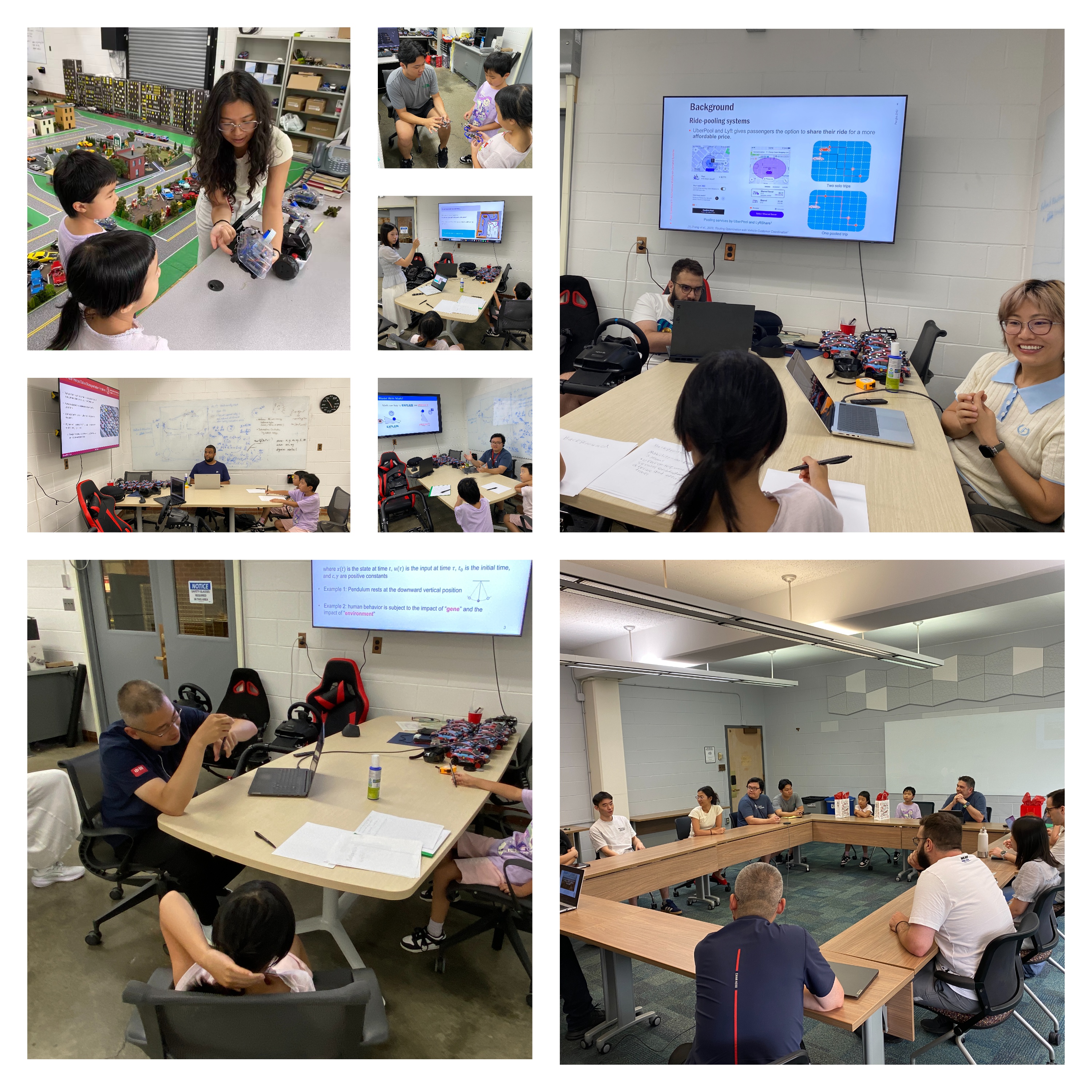
One of the greatest advantages young students can have is the opportunity to see how knowledge is created—not simply how it is taught.
On July 15, my kids - FIRST Robotics team members - had the privilege of visiting Professor Andreas Malikopoulos' Information and Decision Science (IDS) Laboratory at Cornell University. Rather than touring a laboratory filled only with robots and computers, we were introduced to something much deeper: the scientific process behind intelligent systems.
Professor Malikopoulos welcomed my kids and thoughtfully arranged for several Ph.D. researchers to present their ongoing projects. Each presentation demonstrated how complex real-world problems are translated into mathematical models, computational algorithms, engineering systems, and ultimately practical solutions.
The projects covered topics including autonomous vehicles, connected transportation systems, optimization, robotics, artificial intelligence, and decision-making under uncertainty. Although the technical details varied, a common theme emerged:
Great engineering begins by asking the right question before building the right solution.
What impressed me most was not simply the sophistication of the research, but the way each graduate student explained:
For my young kids, this was an invaluable glimpse into what research actually looks like beyond textbooks and classroom assignments.
They saw that engineering is not merely coding robots or building machines. It is a disciplined process of observation, modeling, experimentation, validation, and continuous refinement.
The visit also highlighted something often overlooked in STEM education:
Modern research is profoundly interdisciplinary.
The IDS Lab integrates mathematics, optimization, computer science, artificial intelligence, transportation engineering, systems engineering, operations research, economics, and human decision-making into a unified framework for solving increasingly complex societal challenges.
For my kids, this experience expanded their perspective beyond competitions. Building a robot is exciting, but understanding how autonomous systems cooperate, make decisions, optimize performance, and interact safely with humans represents the next frontier of engineering.
As parents and educators, we often focus on helping students accumulate knowledge. Visits like this remind us that our larger goal is to cultivate curiosity, intellectual humility, and the confidence to engage with problems whose answers are not yet known.
We are deeply grateful to Professor Malikopoulos and his research team for generously sharing their time, expertise, and passion with the next generation of learners.
Students develop intellectual maturity not only through classroom instruction, but through repeated exposure to authentic research environments where they can observe how experts frame questions, test hypotheses, collaborate across disciplines, and create new knowledge.
Early exposure to research laboratories transforms abstract academic subjects into living disciplines. It helps students understand that science is not merely a collection of facts—it is an ongoing process of inquiry. Over time, these experiences cultivate intellectual curiosity, systems thinking, and a deeper appreciation for the role of rigorous research in solving meaningful real-world problems.
CHG Insight:
Don't just teach students what we know. Show them how humanity discovers what it does not yet know.
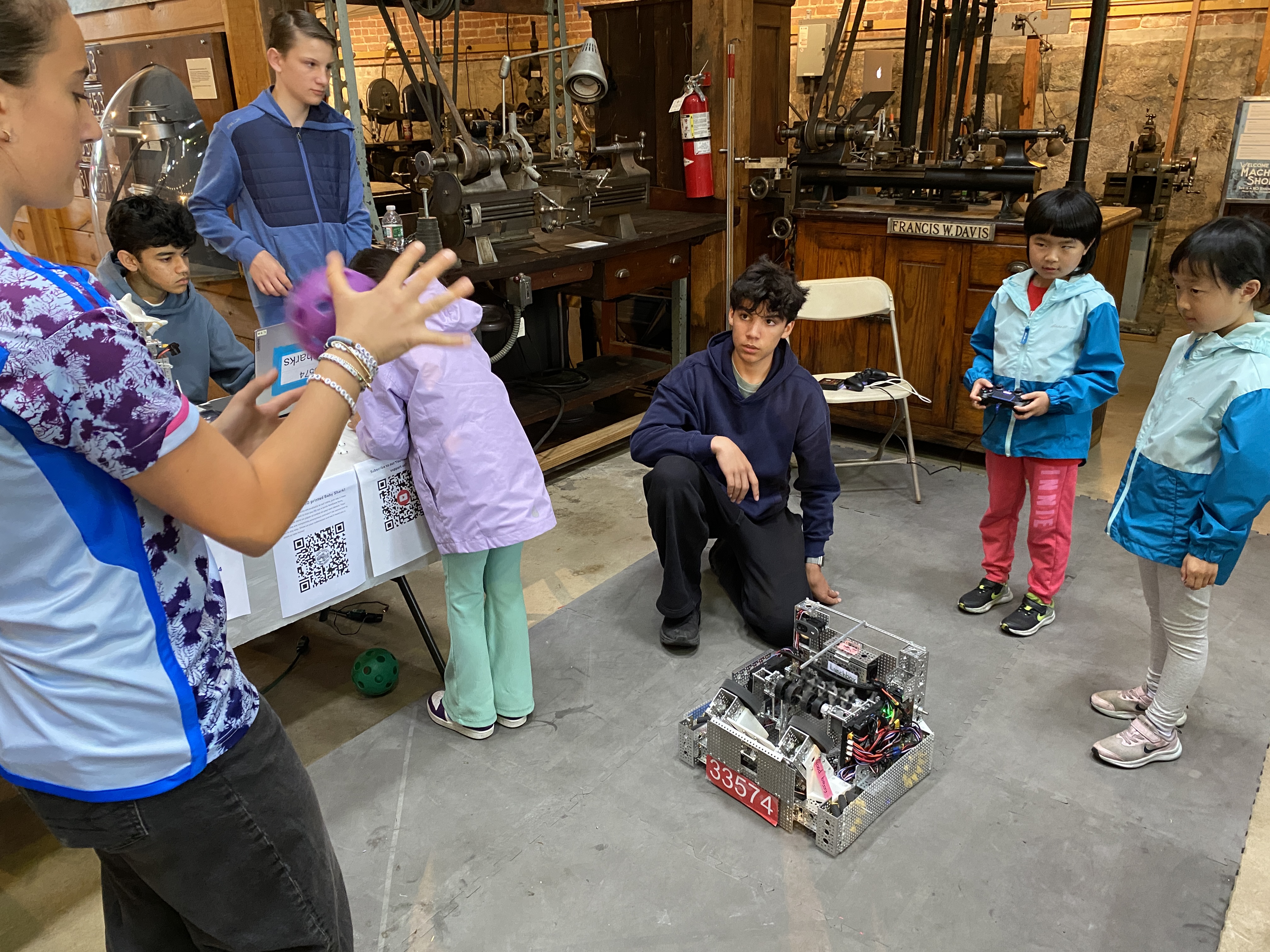
Today I attended NextGen STEM Fest with my children. The event brought together a wide range of STEM organizations, educators, researchers, and technology professionals to create immersive learning experiences for young students and families.
Students had opportunities to directly interact with technologies that many only encounter through videos or classroom discussions. Activities included operating robots, observing demonstrations of Boston Dynamics' Spot robot, exploring virtual reality environments, participating in genetics-related learning activities, and engaging with numerous engineering and science exhibits.
What stood out most was the event's emphasis on participation rather than observation. Children were not merely watching demonstrations; they were encouraged to touch, test, control, experiment, and ask questions. This transformed STEM from an abstract concept into a tangible experience.
As I observed the students, I noticed that curiosity often emerged before understanding. Many children initially approached exhibits simply because they looked interesting. Yet within minutes, they began asking deeper questions:
These questions represent the beginning of authentic STEM learning. Exposure creates curiosity, and curiosity creates motivation for future learning.
The event also highlighted the importance of community infrastructure in talent development. Behind every exhibit were educators, researchers, volunteers, nonprofits, companies, and institutions investing time and resources to make STEM accessible. The goal was not to create immediate experts but to expand students' awareness of what is possible.
For many children, a single interaction with a robot, scientist, engineer, or researcher may become a memorable moment that influences future interests and aspirations.
Many families focus heavily on achievement pathways—advanced courses, competitions, test scores, and college admissions. While these are important, meaningful passion often develops from exposure before specialization.
Students cannot pursue opportunities they have never encountered.
Before asking a student what they want to become, we should help them discover what exists. Experiences such as STEM festivals, research labs, museums, maker spaces, hackathons, and innovation centers expand a child's map of possibilities.
The role of educators and parents is not to dictate a destination but to create conditions where curiosity can emerge naturally.
At CHG, we believe that broad exposure creates informed exploration, informed exploration creates genuine interest, and genuine interest eventually develops into sustained excellence.
Today's STEM Fest was a reminder that sometimes a child's future begins not with a curriculum, but with a moment of wonder.
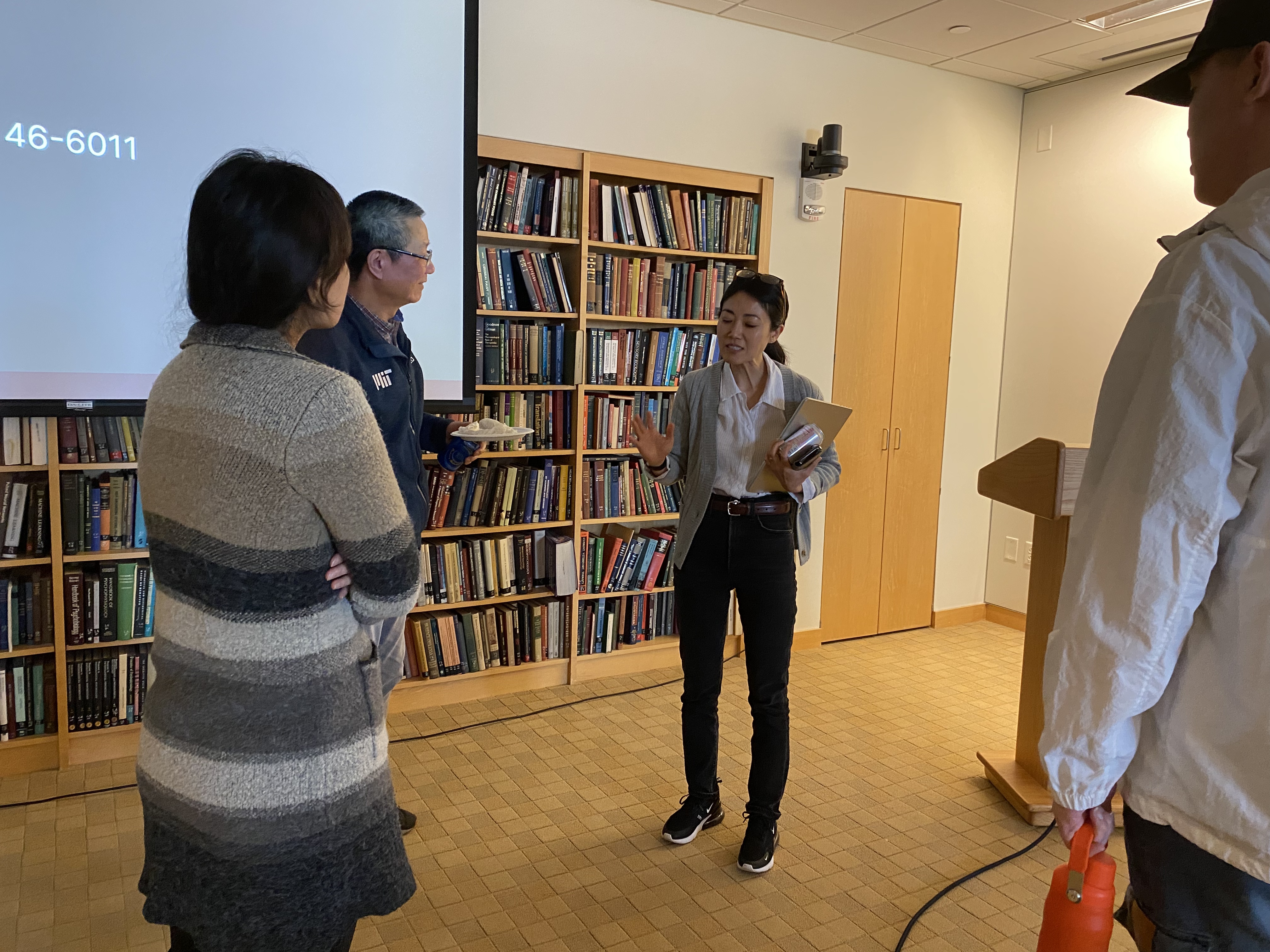
Dr. Gloria Choi’s presentation explored one of the most fascinating intersections in modern neuroscience: how the immune system, microbiome, and nervous system interact to shape brain development and behavior.
A major insight from the talk was that the brain does not develop in isolation. Instead, neural development is deeply connected with signals from the body — especially immune responses and gut microbiota. Dr. Choi discussed how maternal immune activation during pregnancy can influence offspring brain development, producing long-term behavioral changes in animal models. The research demonstrates that environmental and physiological conditions can influence neural circuitry much earlier than traditionally assumed.
Another important theme was the idea that behavior can emerge from distributed biological systems rather than from the brain alone. The presentation emphasized gut-brain communication pathways and how microbes can influence sensory processing, stress responses, and social behaviors. This reframes neuroscience from a purely “brain-centered” model into a systems-level understanding of cognition and behavior.
Dr. Choi also highlighted the importance of interdisciplinary collaboration. The work combines neuroscience, immunology, microbiology, genetics, and computational analysis. The research itself serves as a model for future scientific problem-solving: complex human problems increasingly require multi-domain integration rather than isolated expertise.
One especially valuable takeaway was methodological. Rather than treating behavior as a black box, the lab builds causal chains across layers:
This layered systems approach mirrors engineering logic more than traditional descriptive biology.
The presentation also carried broader implications for education and human development. If cognition and emotional regulation are affected by sleep, stress, inflammation, movement, social environment, and physiological state, then high performance cannot be reduced to “intelligence” alone. Human development becomes a systems design problem.
Dr. Gloria Choi’s work reinforces a core CHG principle: high-level development requires understanding the interaction between biology, environment, cognition, and behavior as an integrated system.
For CHG Advisors, this means:
The deeper lesson is that future leaders may need to think less like narrow specialists and more like systems architects — capable of connecting signals across domains that traditionally remain separate.
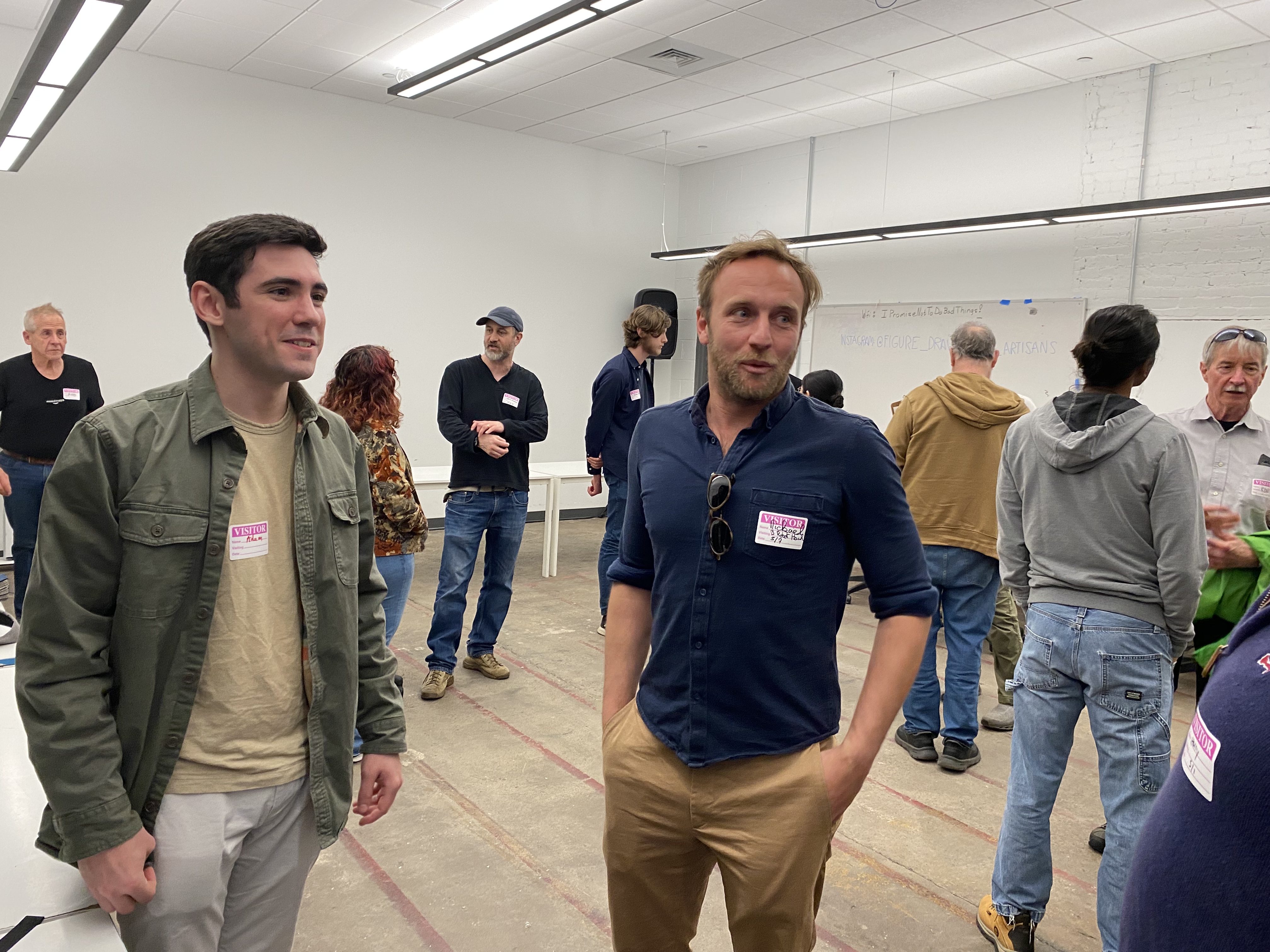
Today’s Boston Robotics Hackers gathering demonstrated a powerful shift happening in modern learning ecosystems: high-value learning increasingly occurs through interdisciplinary communities rather than traditional classrooms alone. The event brought together software engineers, roboticists, educators, psychologists, researchers, and builders into one collaborative learning environment where conversations before and after the formal presentation became equally valuable as the presentation itself.
One major takeaway from the event was the importance of “learning adjacency” — unexpected insight generation that occurs when people from different domains exchange perspectives. Conversations with Chris, a Tufts University PhD student, and Janet, a nonprofit STEM program manager, directly helped shape ideas for an upcoming summer project involving the Stanford Pupper robot platform. These informal exchanges highlighted how innovation often emerges from networked learning rather than isolated expertise.
The technical presentation by Adam Ring focused on warehouse automation and simulation systems at Symbotic. He explained simulation as a continuous loop:
Physical Environment → Observations → Sensors/Actuator Firmware → Robot Software → Back to Environment
This systems-level perspective reinforced that robotics is not simply about coding movement, but about building interconnected feedback architectures where perception, software, and physical reality continuously interact.
A particularly important concept discussed was multi-agent simulation. In warehouse automation, each robot functions as an independent agent with its own operating environment and decision-making system. As the number of robots increases, the complexity of simulation grows exponentially because every robot must account for the behavior of other robots.
Adam explained a distributed simulation strategy where:
This architecture reduces computational overload while maintaining scalable coordination across robotic fleets. The concept has broader implications beyond warehouses, including autonomous vehicles, drone systems, collaborative AI agents, and future educational robotics platforms.
Another valuable insight came from Adam’s personal engineering journey. He described progressing from rough, highly manual coding approaches toward leveraging increasingly sophisticated open-source ecosystems such as:
This progression reflects a major industry trend: modern engineers are becoming system integrators and orchestrators rather than building every component from scratch. Knowing how to combine tools, environments, datasets, and simulation layers is becoming as important as raw programming skill itself.
The event also reinforced a larger educational realization: For many motivated students, meaningful “out-of-classroom learning” is becoming an increasingly dominant percentage of their overall intellectual development. Communities like Boston Robotics Hackers function as decentralized learning accelerators where students gain:
These environments compress learning cycles far faster than traditional curriculum pacing.
Elite modern learning increasingly happens through participation in high-density intellectual ecosystems rather than passive classroom consumption. Students who consistently place themselves inside interdisciplinary communities gain:
The future competitive advantage may not come primarily from knowing more information, but from entering stronger learning networks earlier and learning how to absorb, connect, and apply ideas across domains.
Dr. Karpova’s work focuses on how neural circuits encode learning through experience-driven adaptation, particularly in dynamic and uncertain environments.
A central idea: learning is not just storing information, but continuously updating internal models based on feedback from the environment.
She emphasized how the brain balances:
Neural activity reflects this balance—certain circuits become more active when uncertainty is high, signaling the need to explore.
Her research highlights that:
Experimental models (often animal-based) show that behavior changes as internal representations evolve—suggesting that understanding learning requires observing action, not just outcomes
CHG Insight:
intelligence is less about correctness and more about adaptive iteration under uncertainty
CHG Translation:
CHG Application:
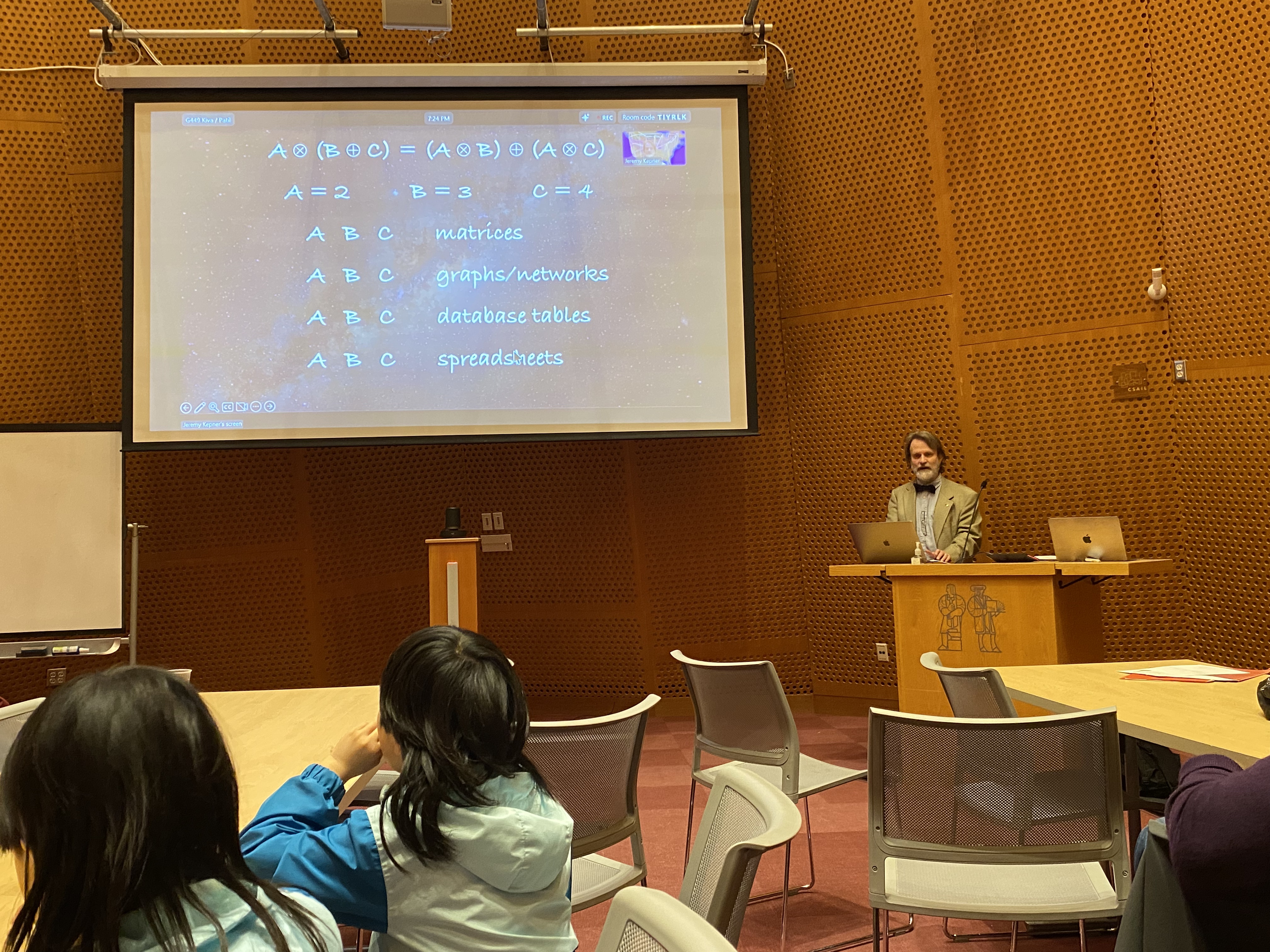
Dr. Jeremy Kepner’s presentation reframed advanced computing—not as an abstract or inaccessible domain—but as a natural extension of elementary mathematics. One of his most striking ideas was that “MIT math is simply adding circles around the elementary math symbols,” illustrating how complex systems are built by layering structure onto foundational concepts.
He demonstrated how core mathematical operations (such as addition, multiplication, and logical relationships) can be extended into powerful frameworks that underpin modern cybersecurity and supercomputing systems. Rather than relying on opaque complexity, these systems are designed through composability—taking simple, well-understood primitives and scaling them through consistent rules.
A key takeaway is the importance of mathematical abstraction as a tool for system design. By representing data and operations in structured formats (e.g., matrices, graphs), engineers can unify seemingly different problems—network security, data processing, and large-scale computation—under a shared mathematical language.
Dr. Kepner’s work highlights that true expertise is not about memorizing advanced techniques, but about seeing the deep structure behind simple ideas and extending them systematically. This aligns with how elite institutions train students: mastering fundamentals to unlock exponential complexity.
At CHG, this reinforces a core belief:
Top-tier performance does not come from early exposure to complexity, but from deep mastery of simple, transferable principles. When students internalize foundational concepts and learn how to layer them, they gain the ability to navigate—and eventually build—complex systems across disciplines.
This is the difference between:
CHG’s role is to guide students from foundational clarity → structural thinking → system-level creation.
CHG Insight:
This aligns with CHG’s focus on meta-cognition over performance metrics. Students must learn how to think, not just what to produce.
CHG Insight:
Elite education is not about admission—it’s about system navigation and utilization. Most students underuse the ecosystem.
CHG Insight:
CHG’s role is to translate exploration into structured advantage (e.g., spike development, narrative building).
CHG Insight:
This directly reinforces CHG’s “operator model”:
Students must be trained to act as builders of their own trajectory, not consumers of opportunity.
CHG Insight:
This supports CHG’s emphasis on long-term intellectual identity (spike) rather than short-term academic perfection.
Traditional cognitive science and behavioral neuroscience rely heavily on hand-designed reinforcement learning (RL) models to explain human and animal decision-making. While foundational, these models:
Recent advances leverage machine learning to automatically discover models from behavioral data:
Unlike black-box AI, Prof. Daw emphasizes interpretable models:
Empirical findings suggest:
Prof. Daw’s paradigm suggests a deeper CHG evolution: The future is not designing the best model for a student — but building systems that can discover how each student actually thinks.
Application to CHG Advisors:
Strategic Insight: This is not just personalization—it is: Interpretability-first human modeling at scale Where CHG becomes:
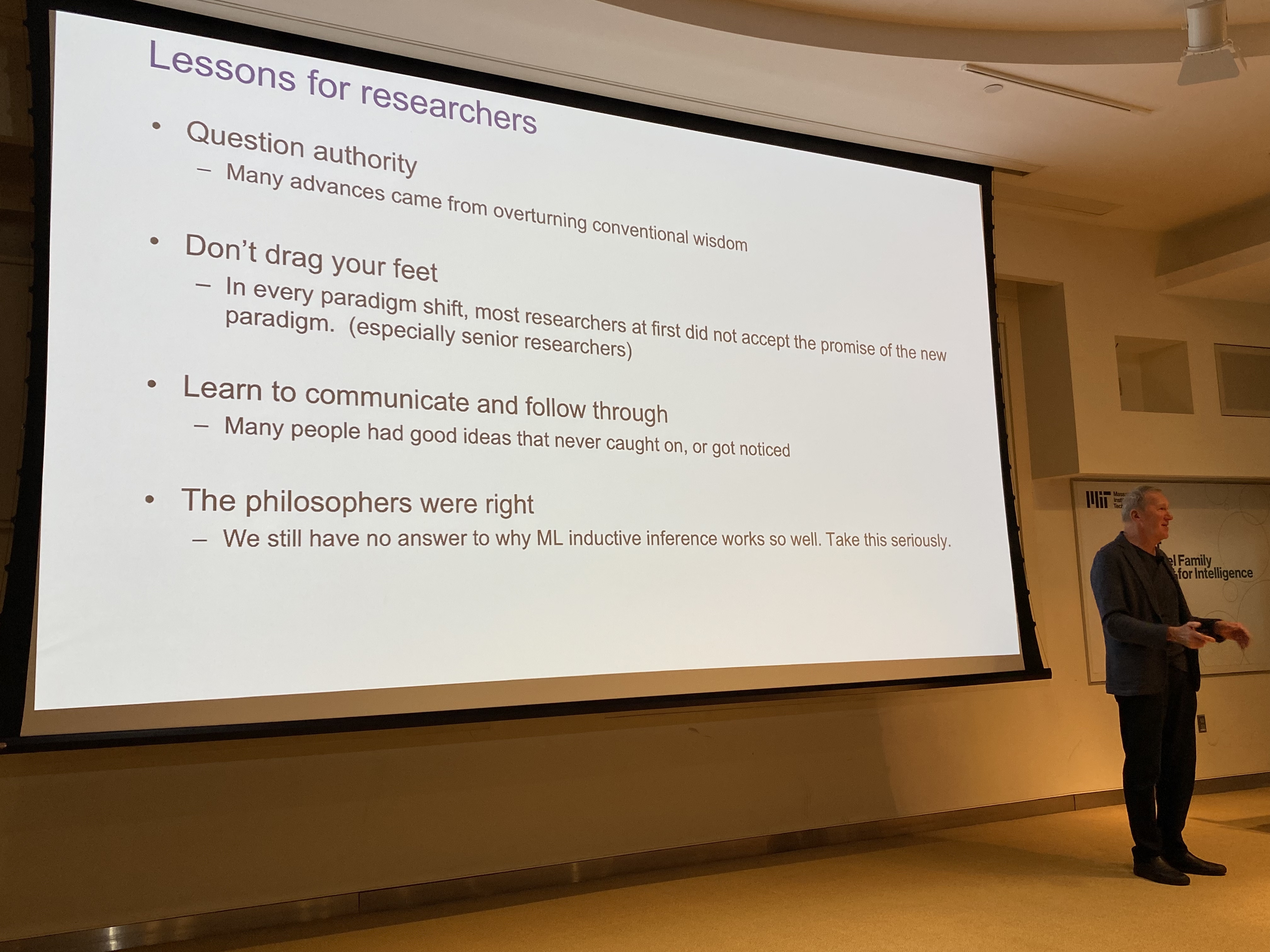
Prof. Mitchell framed machine learning not just as a technology, but as a model for how science progresses:
The deeper insight: Progress happens when a field shifts from human-designed rules → data-driven discovery.
This deceptively simple framework remains foundational because it:
ML did not “replace” earlier approaches—it absorbed and extended them:
Insight: Breakthroughs are often recombinations, not replacements.
Prof. Mitchell emphasized several meta-lessons:
Machine learning is transitioning from:
→ to
This signals a maturation phase: From capability to understanding.
Application to CHG:
This reframes education from content delivery → system design problem.
Prof. Chatterjee shared updates on several ongoing research initiatives illustrating how modern engineering increasingly operates at the intersection of biology, computation, and systems design. His work reflects a broader shift in engineering from isolated technical problem-solving toward integrated, human-relevant innovation pipelines.
A recurring theme in the presentation was the importance of translation — not merely producing knowledge, but ensuring discoveries can move across stages:
basic discovery → prototype → validation → real-world deployment
Key observations:
The research emphasized that modern bioengineering problems cannot be solved through single-variable optimization. Instead, progress requires coordinated understanding across:
This reinforces that elite engineering thinking often involves structuring complexity, not merely solving equations.
Prof. Chatterjee highlighted how iterative testing cycles allow hypotheses to evolve dynamically rather than linearly. This reflects a research culture where uncertainty is expected and leveraged as an input to refinement.
The projects demonstrated how contemporary engineering talent must navigate multiple knowledge architectures simultaneously — biology, statistics, machine learning, and hardware constraints.
Rather than focusing solely on constructing technical artifacts, the work shows increasing emphasis on designing platforms and frameworks that allow future innovation to scale efficiently.
Only after clarifying this architecture do they apply specific tools. Prof. Chatterjee’s work demonstrates that high-level engineering capability increasingly depends on the ability to: frame problems structurally → integrate cross-domain signals → iterate through feedback-informed refinement This reinforces the CHG view that future-ready learners must develop architectural thinking early, especially in fields where boundaries between disciplines are dissolving.
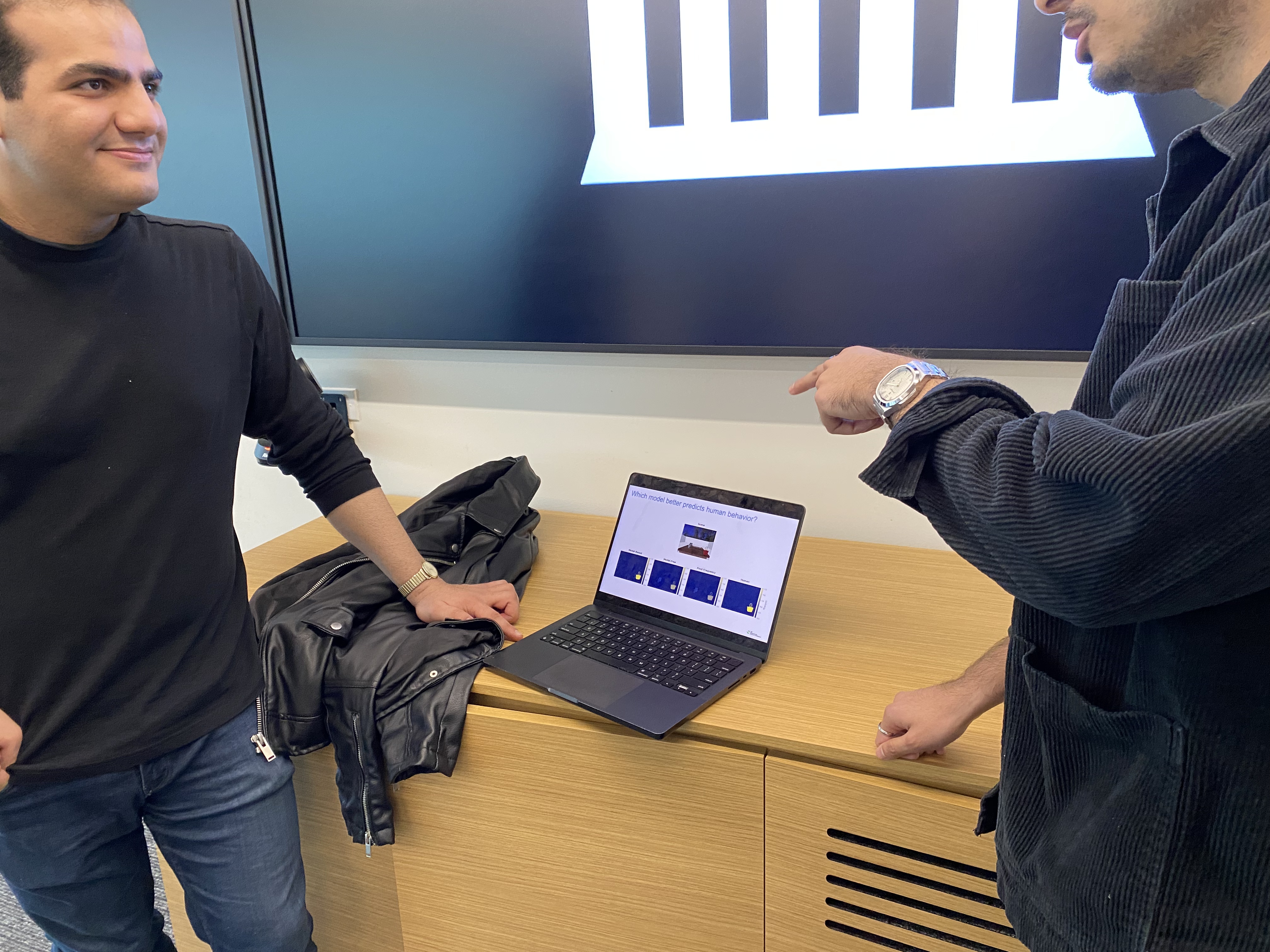
Zoroufi’s work reflects a broader shift in AI research: intelligence is not treated as a static attribute, but as a dynamic system that can be modeled, trained, and iteratively refined.
Key observation:
CHG relevance:
A core theme in Zoroufi’s research is the importance of internal representations — how information is structured within a system.
Implications:
Educational parallel:
The research emphasizes:
This aligns with:
Observed pattern: progress emerges from repeated cycles of hypothesis → test → revision. This directly parallels CHG's structured development loops used in:
Zoroufi’s work highlights how complex problem spaces require:
These characteristics resemble traits seen in:
CHG insight: students benefit from structured exposure to ill-defined problems earlier than traditional curriculum typically allows.
These systems produce stronger long-term cognitive capacity than systems optimized for short-term correctness. Zoroufi’s research reinforces the idea that learning environments can be intentionally designed to cultivate durable intelligence, rather than merely measure it.
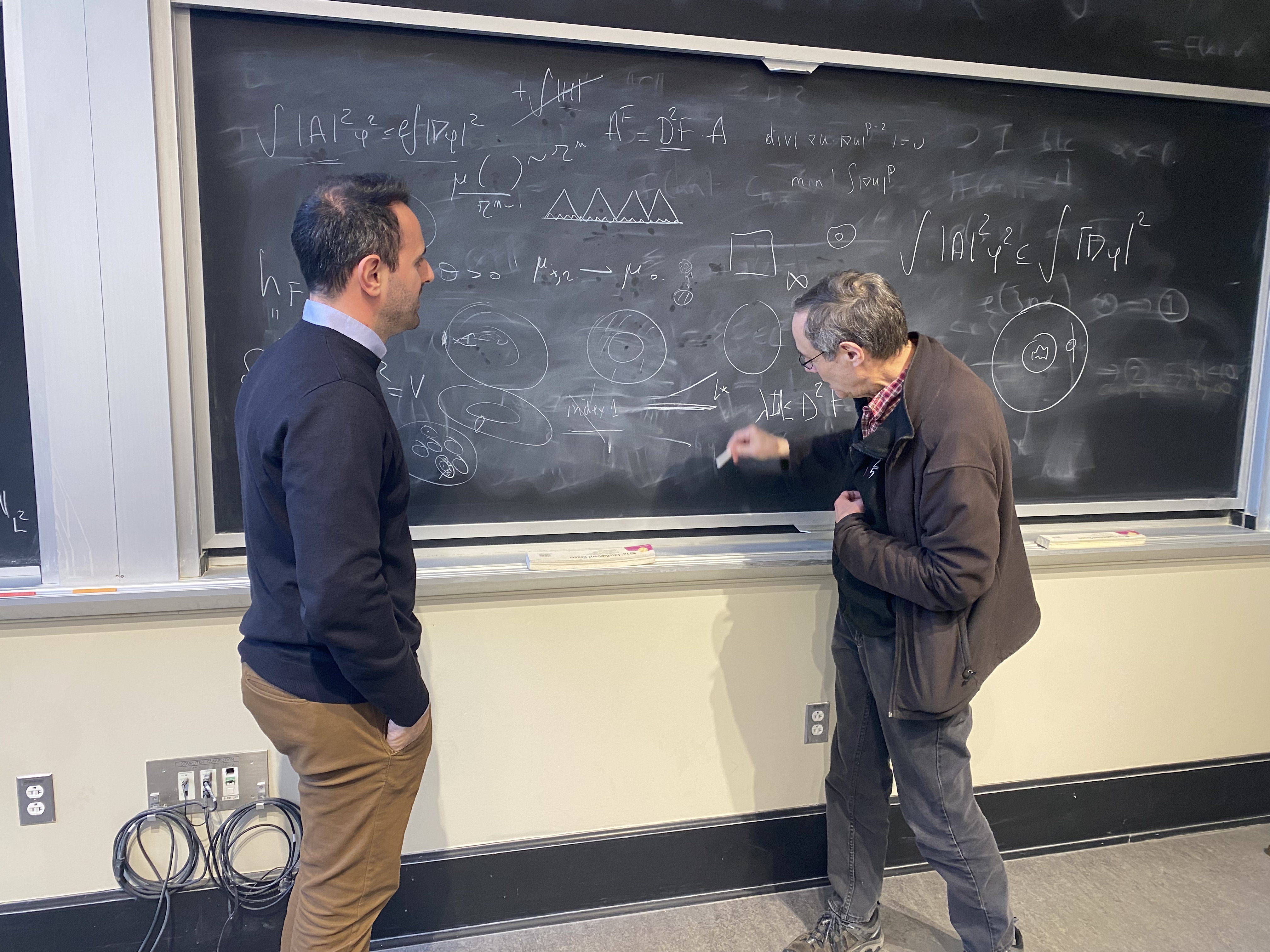
One idea from today’s conversation stayed with me: mastery is not just about knowing—it’s about the ability to reconstruct understanding in real time.
During the session, Prof. Jerison had missed the initial portion of the talk. Instead of passively catching up, he actively rebuilt the argument: asking targeted questions, interrupting at key moments, and walking through the logic piece by piece. Prof. De Rosa responded in kind, reframing and reconstructing the ideas collaboratively.
This wasn’t a traditional lecture. It was co-construction of understanding in action. The interaction highlighted a key distinction: most students are trained to follow, while top thinkers rebuild. They are comfortable with gaps in knowledge because they know how to reconstruct concepts from first principles.
This approach reinforces a critical insight for learning: effective understanding is active, not passive. Success in any intellectual endeavor depends less on memorization or exposure and more on the ability to dynamically rebuild frameworks of knowledge, iteratively testing, questioning, and refining.
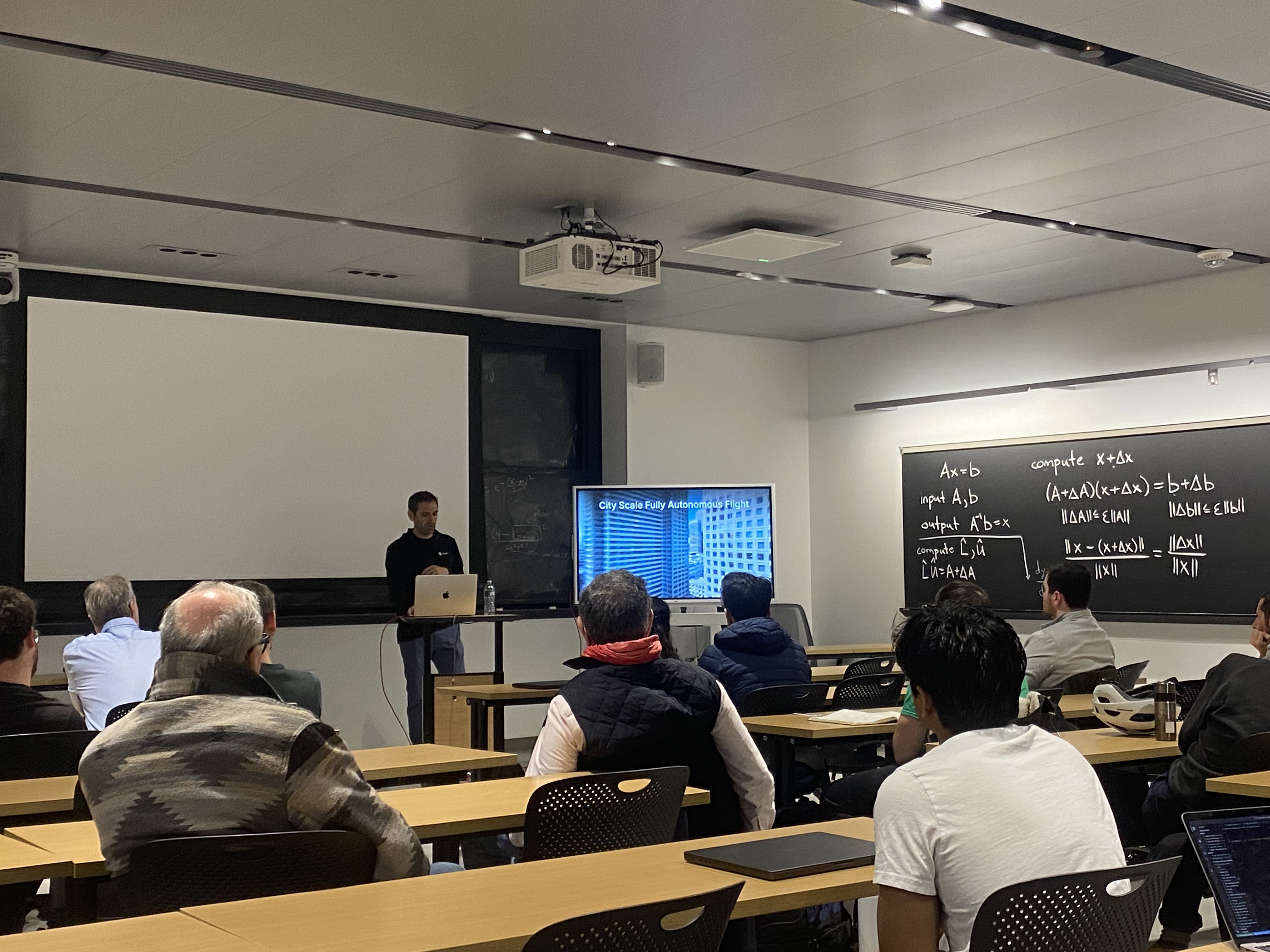
One idea from today’s conversation stayed with me: technological breakthroughs alone do not determine success. The real challenge lies in aligning innovation with real-world needs.
Bry described how Skydio grew from research roots at MIT into one of the leading drone manufacturers in the United States. His early research focused on autonomous navigation — including experiments flying drones through complex environments such as parking garages.
Yet he emphasized that technical capability does not automatically translate into product success. Skydio’s first product, the Skydio R1, represented a significant engineering achievement but failed commercially because the company was still “about twenty degrees away from the market.”
That idea is striking. Even with strong technology, the direction of application must be continuously adjusted to meet real operational needs.
Bry also highlighted a shift in focus over time: Skydio ultimately emphasized the people using the technology rather than the technology itself. Public safety teams, infrastructure inspectors, and operators working in high-risk environments shaped how the system evolved.
In other words, the system succeeds when engineering capability is designed around human decision-making rather than technological demonstration.
